
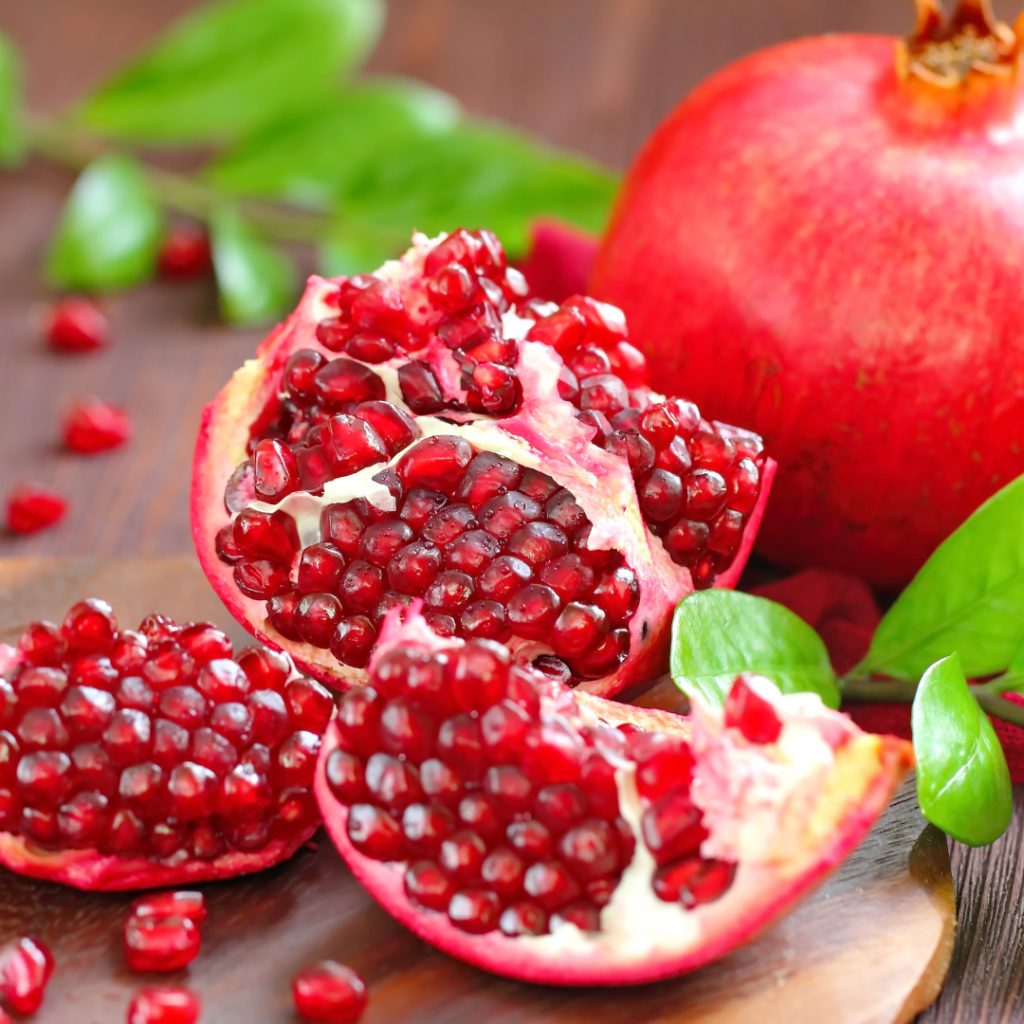
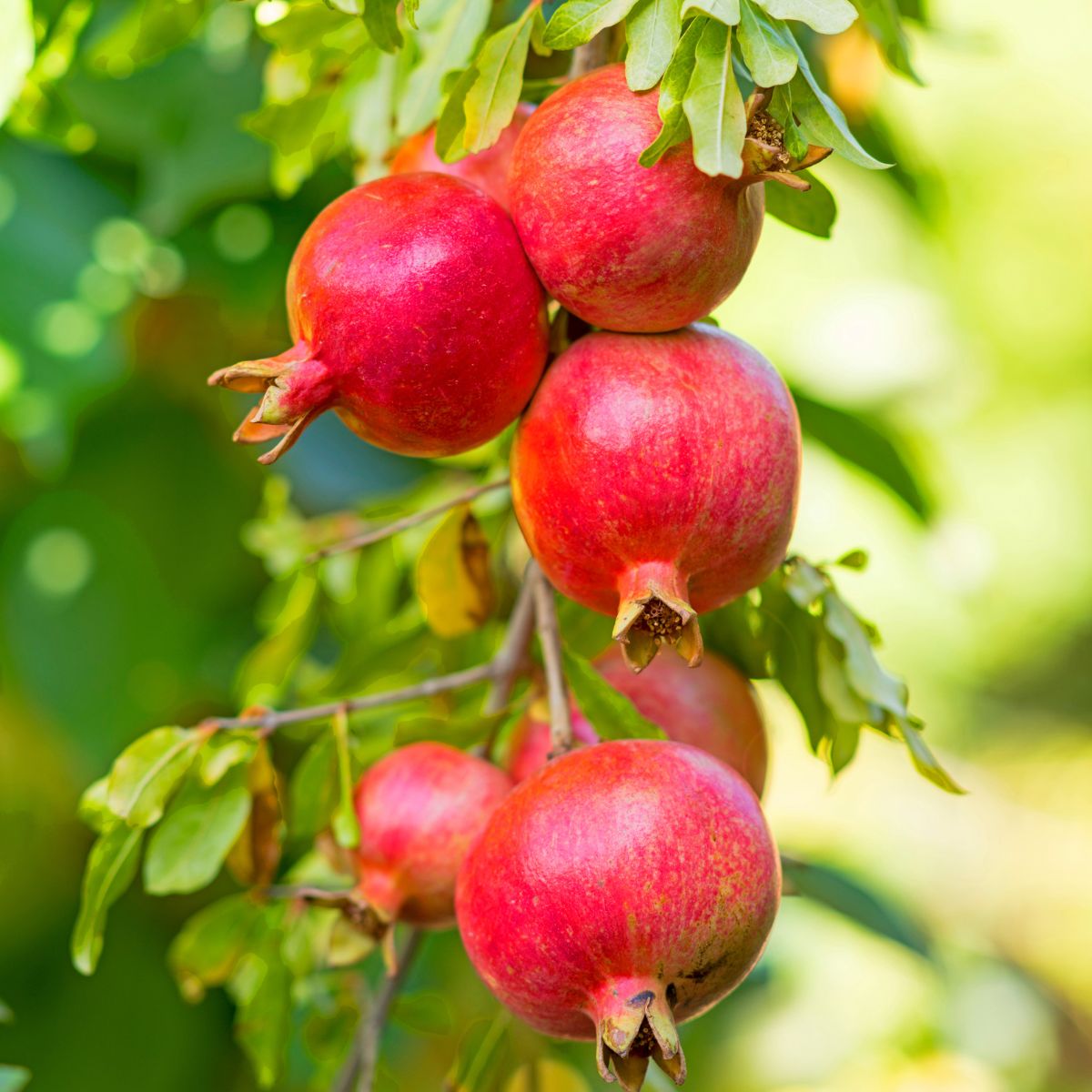
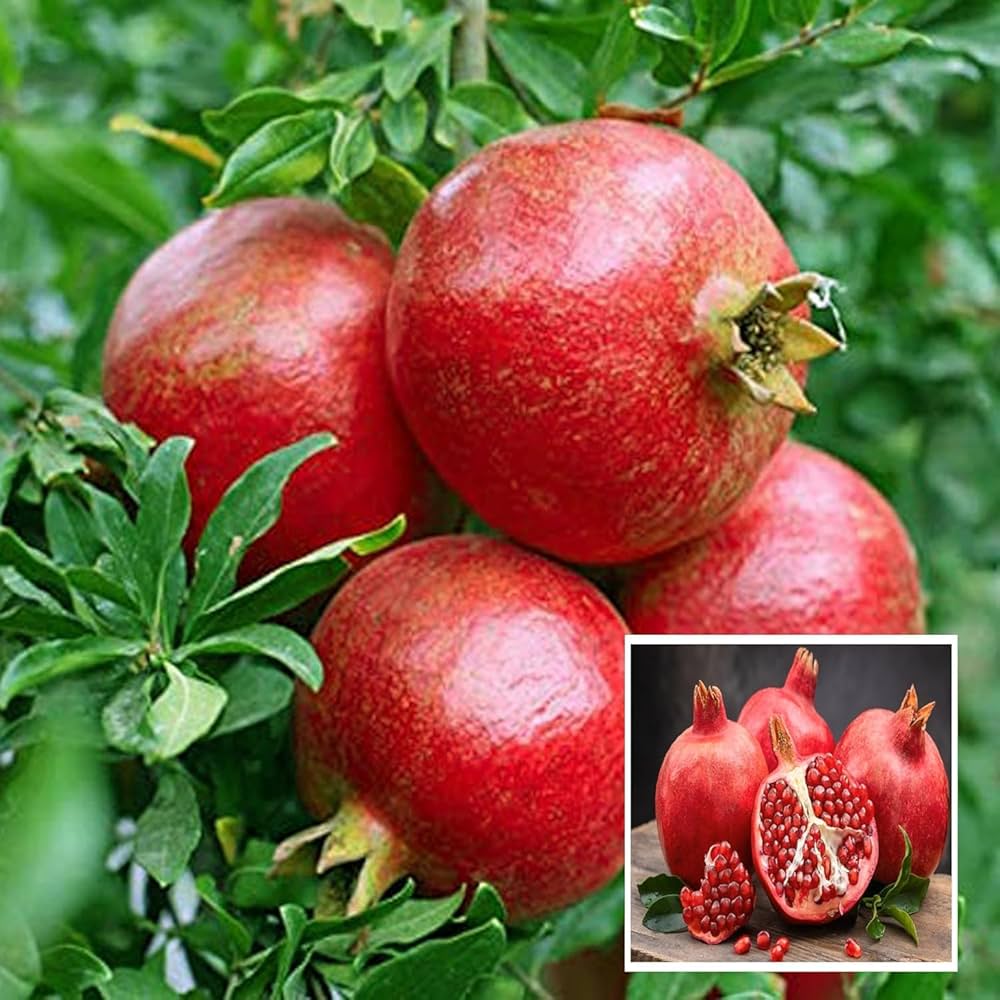
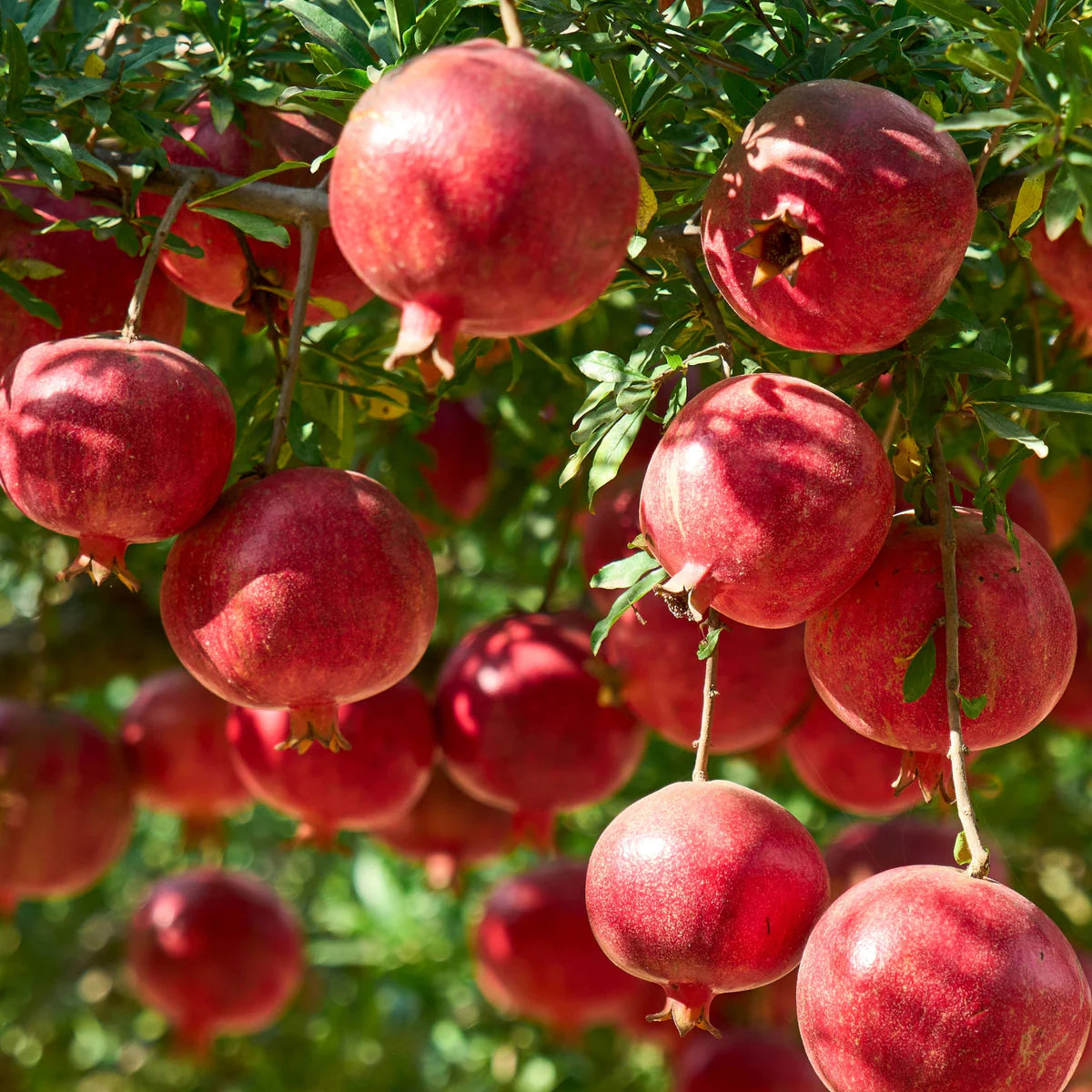
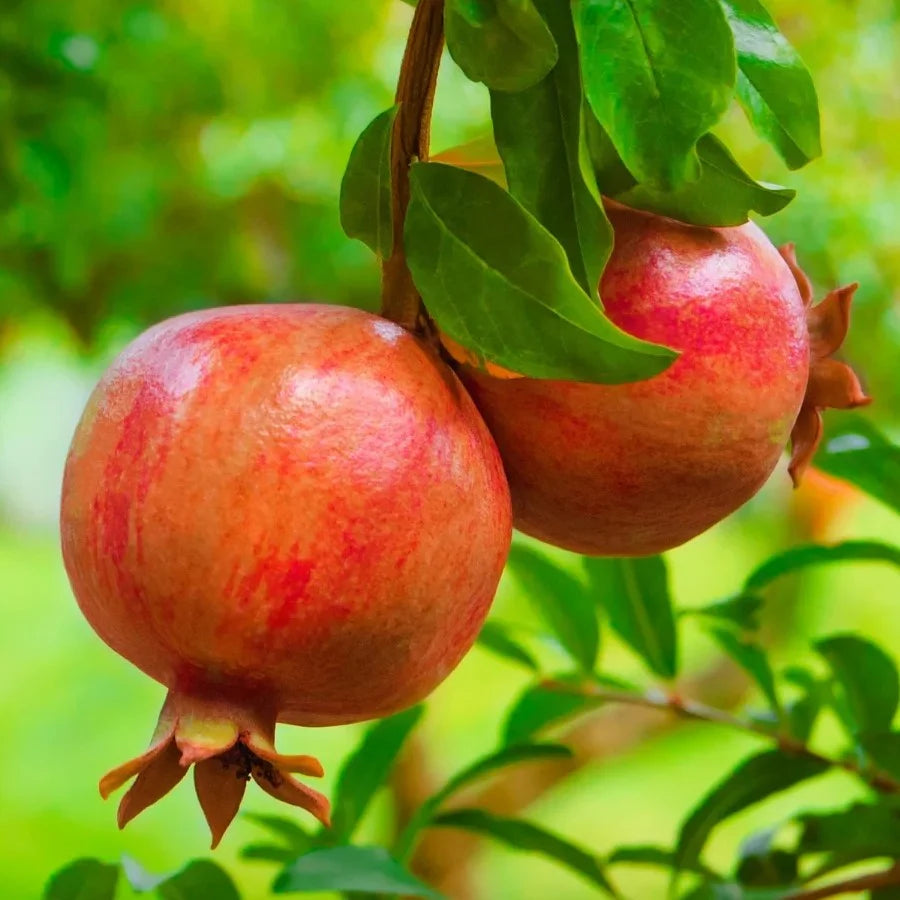
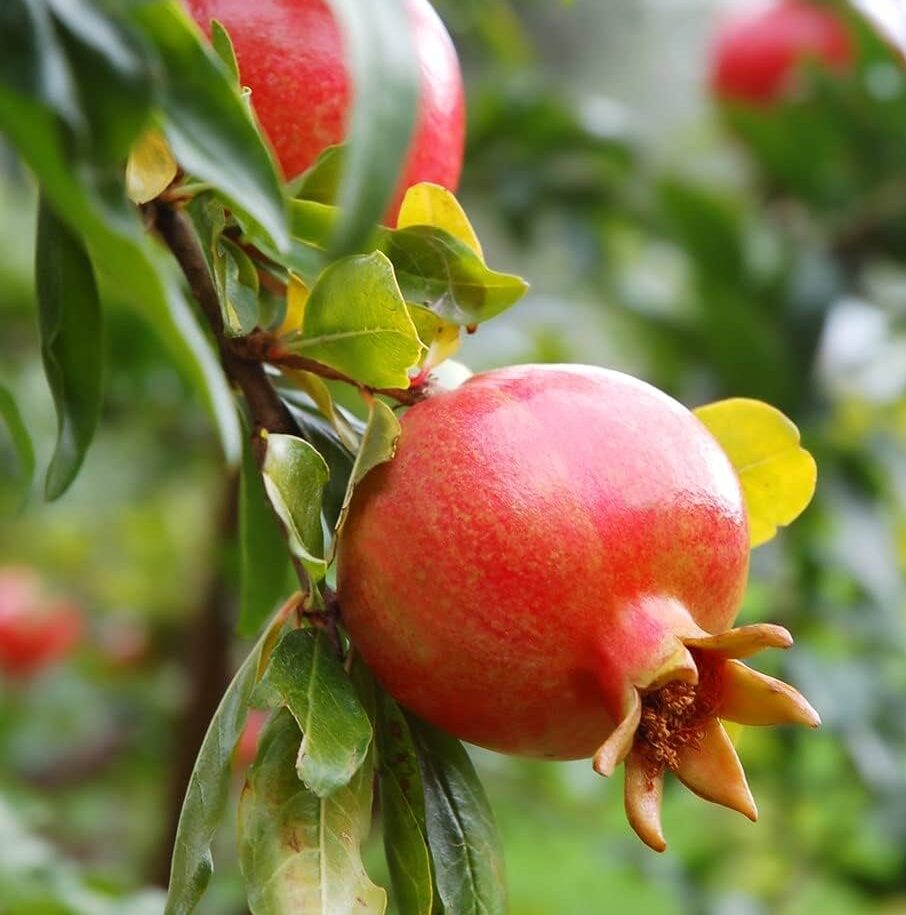
High-Yield Fruiting Tree: Produces sweet, ruby-red pomegranates rich in antioxidants.
Drought-Tolerant & Hardy: Thrives in hot, dry climates and adapts to various soil types.
Non-GMO & Heirloom Quality: Naturally sourced, chemical-free seeds suitable for organic gardens.
Ornamental Appeal: Bright red flowers add beauty before fruiting begins.
Long-Lived Tree: A resilient and productive addition to edible landscapes.
Health-Promoting Fruit: Pomegranate arils are packed with vitamins, minerals, and antioxidants.
Scientific Name: Punica granatum
Common Name (US): Pomegranate Tree
Plant Type: Deciduous Fruit Tree
Growth Height: 10–20 feet (3–6 meters)
USDA Hardiness Zones: 7–11
Sun Exposure: Full Sun
Soil Type: Well-draining loamy or sandy soil
Soil pH: 5.5–7.0
Water Requirements: Moderate; drought-tolerant once established
Temperature for Germination: 70–85°F (21–29°C)
Germination Time: 30–45 days
Planting Depth: 1/4 inch (0.6 cm)
Spacing: 10–15 feet apart
Bloom Season: Late Spring to Early Summer
Fruit Season: Late Summer to Fall
Seed Type: Non-GMO, Heirloom Variety
Fertilization: Balanced organic fertilizer during growing season
Lifespan: Long-lived perennial
Uses: Fresh eating, juicing, and ornamental planting
Seed Preparation: Soak seeds in warm water for 24 hours before sowing.
Sowing: Plant seeds 1/4 inch deep in seed-starting mix.
Light & Temperature: Maintain warm, sunny conditions with 70–85°F temperature.
Watering: Keep soil moist but avoid waterlogging.
Transplanting: Move seedlings outdoors after the last frost in full sun.
Soil Preparation: Mix compost or organic matter for better fruit yield.
Pruning: Prune annually to shape the tree and encourage airflow.
Harvesting: Fruits mature in 5–7 months after flowering when the skin turns deep red.
Choose options